Skip to content
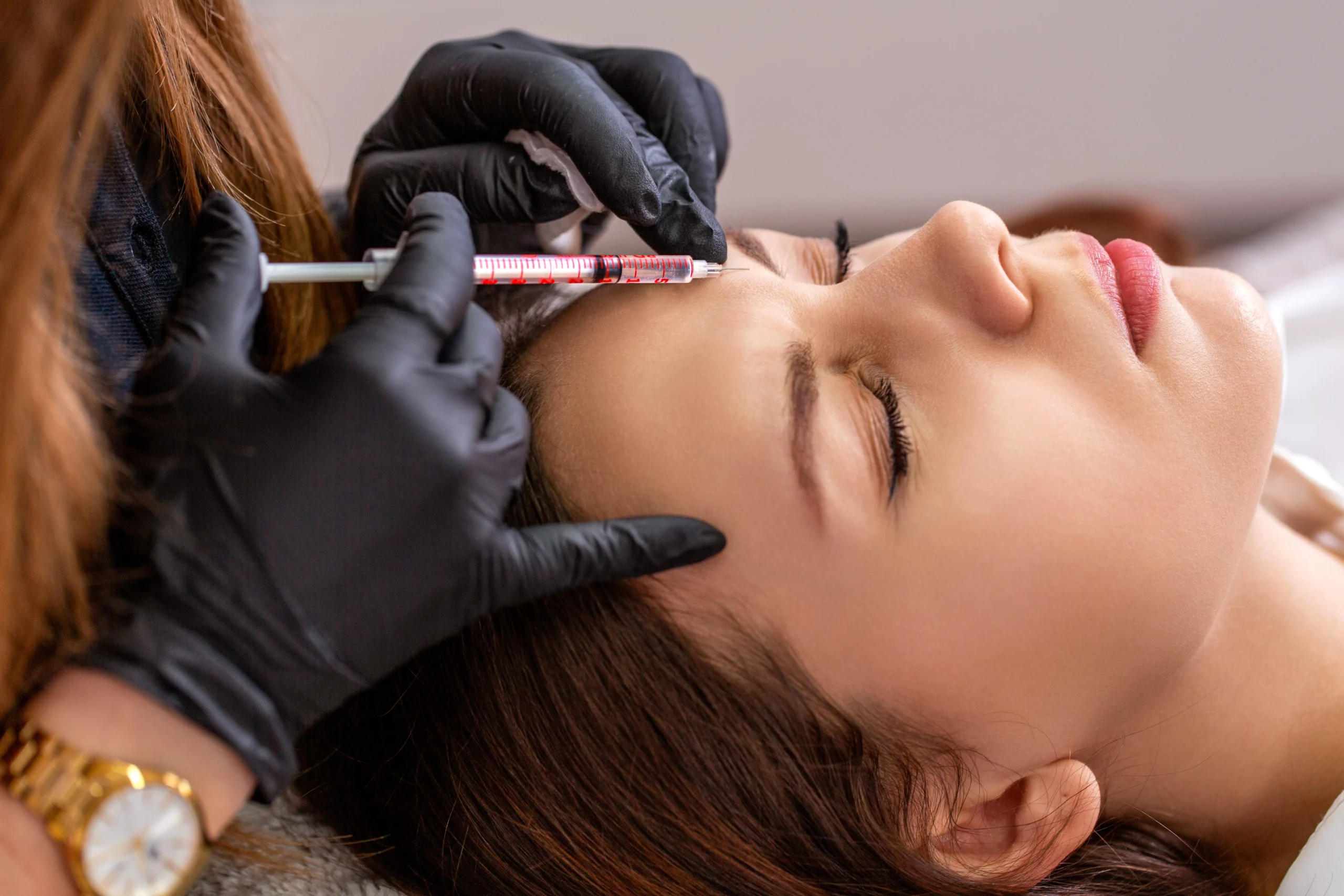
When patients ask about Xeomin vs Botox, the short answer is this: both are FDA-approved botulinum toxin type A injectables that relax facial muscles to reduce wrinkles, but they differ in formulation, protein content, and how providers use them in practice. Understanding those differences helps you have a more informed conversation with your injector before committing to a treatment.
Key Takeaways
- Xeomin contains no accessory proteins, making it a “naked” formulation that may reduce the risk of antibody resistance over time.
- Botox has decades of clinical history and remains the most recognized neuromodulator brand in the United States.
- Both injectables typically last three to four months, with satisfaction rates converging by month three, according to Merz Aesthetics (2024).
- Xeomin may offer a slight cost-per-unit advantage, though total session costs depend on the number of units needed.
- Botulinum toxin type A accounted for 97.8% of total botulinum toxin revenue in 2024, according to Market.us (2025), reflecting the dominance of products like Botox and Xeomin.
- Provider skill and injection technique remain the single most important variable in your results, regardless of which product is selected.
The global botulinum toxin market was valued at $8.9 billion in 2025 and is projected to reach $15.7 billion by 2030 at an 11.7% compound annual growth rate, according to Markets and Markets (2025). With that much growth, it is no surprise that patients across the United States are carefully comparing their options before sitting in the treatment chair.
What Xeomin Actually Is (and Why the Formulation Matters)
Xeomin (incobotulinumtoxinA) is manufactured by Merz Aesthetics and received FDA approval in 2011 for cosmetic use in treating glabellar lines, the vertical creases between the brows commonly called “11 lines.” Like Botox, it works by temporarily blocking the nerve signals that cause targeted facial muscles to contract.
What makes Xeomin structurally distinct is what it does not contain. Traditional botulinum toxin formulations include accessory proteins that surround the active neurotoxin. Xeomin’s manufacturing process removes those proteins entirely, leaving only the active neurotoxin complex. This is why it is frequently called a “naked” or “pure” formulation in clinical literature.
From a practical standpoint, this matters for a specific subset of patients: those who have received many rounds of neuromodulator treatment over the years. Repeated exposure to accessory proteins can, in some cases, prompt the immune system to produce neutralizing antibodies, which may reduce the effectiveness of future injections. By eliminating those proteins, Xeomin theoretically lowers the chance of that happening, though individual responses vary.
You can review the detailed pharmacological comparison on Drugs.com’s Xeomin vs Botox comparison page for a thorough breakdown of how each product works at the molecular level.
How Xeomin and Botox Differ: A Side-by-Side Breakdown
Formulation: Protein-Free vs. Protein-Containing
Botox (onabotulinumtoxinA), manufactured by Allergan Aesthetics (an AbbVie company), contains hemagglutinin and other accessory proteins alongside the active neurotoxin. These proteins contribute to the stability of the product and have been studied extensively since Botox’s FDA approval in 2002 for cosmetic use.
Xeomin’s protein-free design means it requires no refrigeration during transport, though storage protocols at the clinical level remain similar. It also means there are fewer foreign proteins entering your body per session, which some providers and patients consider a meaningful distinction.
Onset of Results: Which Works Faster?
Both products begin producing visible results within three to five days, with full results typically apparent by day 14. Some patients and providers report that Xeomin may produce initial effects slightly faster, but the clinical difference is modest. If you are preparing for an event, two weeks of lead time is the practical planning rule for either product.
Longevity: How Long Do Results Last?
Here is where the two products are most closely matched. Clinical data consistently shows that both Xeomin and Botox maintain results for approximately three to four months in most patients. A 2025 retrospective study of 206 spasticity patients published on PMC found that both Botox and Xeomin showed similar effectiveness, with mean durations of 3.72 months and 3.87 months respectively, according to the Switox study (PMC, 2025).
Cosmetic patients often see results begin to soften at the three-month mark. Factors that affect longevity include the area treated, the number of units injected, your metabolism, and how active the muscles in that region are day to day.
Diffusion and Precision: Does One Spread More?
This is a nuance that gets oversimplified in most comparisons. Xeomin’s protein-free formulation is sometimes said to diffuse slightly more broadly through tissue than Botox, which can be an advantage or a disadvantage depending on the treatment area. For large surface areas like the forehead, broader diffusion may mean more even coverage with potentially fewer injection points. For highly precise areas like the orbicularis oculi muscle around the eye, a more localized product may be preferred.
A split-face study examining both products for blepharospasm treatment, published on PubMed, found no significant clinical difference in efficacy or safety between onabotulinumtoxinA and incobotulinumtoxinA in that specific application. The takeaway: diffusion differences exist theoretically, but a skilled injector accounts for them through technique and dosing.
Cost Differences: Unit Price vs. Total Session Cost
Xeomin is often priced slightly lower per unit than Botox, which reflects in part the competitive landscape of the neuromodulator market. Jeuveau, another competitor, increased its U.S. market share from 4% in 2019 to 14% in 2025 partly by pricing 20-30% below the market leader, according to Mordor Intelligence (2026). Xeomin occupies a similar value-oriented position relative to Botox without sacrificing clinical credibility.
However, the per-unit price is only one part of the cost equation. Because dosing is adjusted based on muscle mass, the area being treated, and the desired outcome, the total number of units used in your session is what ultimately determines what you pay. In some cases, more units of a lower-priced product may be needed to achieve the same result as fewer units of a higher-priced one. Always ask your provider for a unit-based estimate, not just a flat session price.
| Factor | Xeomin | Botox |
| FDA Cosmetic Approval | 2011 | 2002 |
| Accessory Proteins | None (naked formulation) | Present |
| Typical Onset | 3-5 days | 3-5 days |
| Full Results | ~14 days | ~14 days |
| Average Duration | 3.5-4 months | 3.5-4 months |
| Resistance Risk | Lower (theoretical) | Present (long-term use) |
| Price Per Unit | Generally lower | Generally higher |
| Brand Recognition | Growing | Dominant |
| Single-Session Upper-Face Clearance | Approved 2024 | Established |
Weighing the Pros and Cons of Each Product
What Xeomin Does Well
- The protein-free formula reduces theoretical antibody resistance risk for long-term patients.
- A slightly lower per-unit cost can make treatment more accessible for patients on a defined budget.
- Complex-protein-free formulations like Xeomin are gradually gaining market share, bolstered by a single-session upper-face indication cleared in 2024, according to Mordor Intelligence (2026).
- Xeomin received Phase 2 clinical study results in December 2024 demonstrating safety and effectiveness for treating platysma prominence, suggesting its indications are actively expanding.
Where Xeomin Has Limitations
- Fewer years of cosmetic data compared to Botox, which has decades of post-market surveillance in the U.S.
- Some providers have more hands-on experience with Botox, meaning their technique may be more refined with that product specifically.
- Broader diffusion characteristics require precise dosing calculations to avoid unwanted spread in delicate areas.
What Botox Does Well
- Botox has one of the longest safety records of any cosmetic injectable on the market, with data going back to the late 1980s (it was first approved for a medical indication in 1989).
- Strong provider familiarity across the United States means you have a wider network of experienced injectors to choose from.
- The localized injection behavior can be advantageous for highly targeted treatments such as crow’s feet or brow shaping.
- Patient satisfaction data from Merz Aesthetics (2024) shows Botox slightly ahead at months one and two: 99.2% vs. 95.7% satisfaction at month one, and 95.0% vs. 89.7% at month two, though both products converge by month three at 80.7% vs. 80.2%.
Where Botox Has Limitations
- The higher per-unit cost can add up over time, particularly for patients maintaining a regular treatment schedule.
- Accessory proteins, while generally well tolerated, represent a small but nonzero variable in long-term antibody response.
- Brand saturation can sometimes lead to less thorough consultations, with providers defaulting to Botox without evaluating whether an alternative might better suit the patient.
You can review GoodRx’s Botox vs Xeomin breakdown for a consumer-focused look at pricing, insurance coverage considerations, and how these products are accessed in the U.S. market.
Which Product Is the Right Fit for Your Goals?
The honest answer is that neither product is universally superior. Your best option depends on several factors that a qualified provider should assess during a consultation.
Xeomin may be the better fit if:
- You have been receiving neuromodulator treatments for five or more years and want to reduce long-term antibody risk.
- You are cost-conscious and want to maximize the number of treatment areas within a set budget.
- You are a new patient without a prior brand preference or established response pattern.
Botox may be the better fit if:
- You have a documented history of excellent results with it and no reason to switch.
- You are addressing a highly precise area where localized delivery is critical.
- Your provider’s clinical experience is more extensive with Botox and they recommend it based on your anatomy.
Important context: Cosmetic minimally invasive procedures using neuromodulator injections, including Botox, Dysport, Xeomin, Jeuveau, and Daxxify, reached 9,480,949 procedures in 2023, a 9% increase from the previous year, according to Yahoo Finance (2025). That volume reflects a wide range of patient profiles and treatment goals, which is precisely why a one-size-fits-all recommendation does not serve you well.
A detailed decision framework is available in the Empire Medical Training comparison of Xeomin vs Botox, which covers dosing ratios and clinical considerations from a provider education perspective.
Safety, Side Effects, and What to Watch For
This section is conspicuously absent from most Xeomin-Botox comparisons, and that is a meaningful gap. Both products share a similar side-effect profile because both deliver botulinum toxin type A into muscle tissue.
Common side effects for both products include:
- Mild injection-site bruising or swelling (typically resolving within 48-72 hours)
- Temporary headache
- Localized tenderness at the injection point
Less common but possible side effects include:
- Eyelid ptosis (drooping) if product migrates near the levator palpebrae muscle
- Asymmetry if dosing is uneven between sides
- Allergic reaction (rare; seek immediate care if you experience difficulty breathing, widespread rash, or swelling)
Both products are contraindicated during pregnancy and breastfeeding, in patients with neuromuscular disorders such as myasthenia gravis or Lambert-Eaton syndrome, and in anyone with a known hypersensitivity to botulinum toxin or any product component. The NIH’s National Library of Medicine maintains regularly updated clinical reference information for both formulations.
The most effective way to minimize your side-effect risk is straightforward: choose an injector with documented training and clinical experience, have a thorough consultation where your medical history is reviewed, and follow pre- and post-treatment care instructions precisely.
How Provider Technique Shapes Your Results More Than Brand Choice
This point deserves its own section because it is consistently underemphasized. The difference between a skilled injector and an inexperienced one is far greater than the difference between Xeomin and Botox in the hands of either.
Facial anatomy varies significantly from person to person. Muscle depth, insertion points, and skin thickness all influence where product should be placed and in what quantity. An experienced provider maps your anatomy during consultation, customizes unit counts per area, and adjusts technique based on how your face responds over multiple sessions.
When you select a practice for neuromodulator treatment, ask about the injector’s specific training, how many procedures they perform monthly, and whether they conduct follow-up assessments after treatment. These questions matter more than which vial sits on## Things to Know
- Xeomin does not require refrigeration during shipping because its protein-free formulation is more stable at room temperature, though clinical storage protocols still apply once it arrives at your provider’s office.
- Dosing between Xeomin and Botox is generally considered unit-for-unit equivalent for cosmetic indications, but individual providers may adjust ratios based on their clinical experience with each product.
- If you have never had neuromodulator treatment before, your first session results serve as a baseline: your provider learns how your muscles respond, which informs dosing for every future session regardless of which brand you use.
- Antibody resistance to botulinum toxin, while real, is relatively uncommon in cosmetic patients who receive standard doses at appropriate intervals. It is more frequently documented in patients receiving therapeutic high-dose treatments for conditions like cervical dystonia or spasticity.
- Some providers stock only one product due to purchasing agreements or personal preference. If you have a specific reason to request Xeomin over Botox (or vice versa), confirm availability before booking your appointment.
- Combining neuromodulator treatments with dermal fillers, laser resurfacing, or medical-grade skincare can extend and enhance your results, but the timing and sequencing of those treatments should be planned by your provider at consultation.
Book Your Personalized Neuromodulator Consultation at Rose Medical Aesthetics
If you have been weighing your options and want a provider who takes your anatomy, goals, and treatment history seriously, Rose Medical Aesthetics in Sarasota, Florida is ready to help. Under the care of Rosalie Orrostieta, the team at Rose Medical Aesthetics offers personalized consultations where your specific skin concerns drive the treatment plan, not a default product preference.
Call Rose Medical Aesthetics at 941-344-9850 or visit the practice at 3100 Southgate Circle, Sarasota, FL 34239 to schedule your consultation. You can also find Rose Medical Aesthetics on Google Maps to get directions and read patient reviews before your first visit.
Take the next step today: call the office directly or visit rosemedaesthetics.com to request your appointment and get a personalized recommendation on which neuromodulator is right for your goals.
Frequently Asked Questions
Q: Is Xeomin as effective as Botox for forehead lines and crow’s feet?
Yes, Xeomin is clinically comparable to Botox for treating forehead lines, glabellar lines, and crow’s feet in most patients.
Both products use the same active ingredient, botulinum toxin type A, and work through the same mechanism of blocking nerve-to-muscle signaling. Patient satisfaction data from Merz Aesthetics (2024) showed that satisfaction rates for both products were nearly identical by month three, at 80.2% for Xeomin and 80.7% for Botox, confirming that long-term efficacy is closely matched. Your results will depend more on the number of units used and your provider’s injection technique than on which brand is selected.
Q: Can you switch from Botox to Xeomin without losing effectiveness?
Yes, switching between Botox and Xeomin is clinically safe and does not reset or diminish your results.
A 2025 retrospective study of 206 spasticity patients, published in PMC and cited as the Switox Study, found that 73.66% of patients successfully switched from Botox to Xeomin following reimbursement changes, with no significant drop in effectiveness. Duration of effect was nearly identical between the two groups. In a cosmetic context, switching is straightforward as long as your provider accounts for any dosing nuances specific to the product being used.
Q: How much does Xeomin cost compared to Botox in the United States?
Xeomin is generally priced slightly lower per unit than Botox, though total session costs vary based on the number of units your provider recommends.
Botox has historically commanded a premium due to its brand recognition and dominant market position. Xeomin’s lower per-unit price can make a meaningful difference over time if you maintain a regular treatment schedule of three to four sessions per year. That said, the total cost of your appointment depends on which areas are treated and how many units are required, so always request a unit-based quote during your consultation rather than comparing flat session fees.
Q: Who is a good candidate for Xeomin rather than Botox?
Patients who have been receiving neuromodulator treatments for several years, or those who want to minimize long-term exposure to accessory proteins, may find Xeomin a particularly well-suited option.
Xeomin’s protein-free formulation is often recommended by providers as a proactive measure for long-term patients who want to reduce the theoretical risk of developing neutralizing antibodies over time. It is also a strong option for first-time patients who do not have a prior brand preference, since it delivers comparable results at a slightly lower price point in many practices. Patients with a documented allergy or sensitivity to any component of Botox’s formulation should specifically discuss Xeomin with their provider.
Q: Are the side effects of Xeomin and Botox different?
The side-effect profiles of Xeomin and Botox are nearly identical because both deliver the same active neurotoxin into muscle tissue.
Both products carry the same common risks: injection-site bruising, temporary swelling, mild headache, and in rare cases, localized ptosis or asymmetry if product placement is imprecise. Neither product should be used during pregnancy or breastfeeding, and both are contraindicated in patients with neuromuscular disorders such as myasthenia gravis. The primary formulation difference, namely Xeomin’s lack of accessory proteins, does not meaningfully alter the acute side-effect profile. Any concerns about your personal medical history should be discussed thoroughly with your provider before treatment.
The Bottom Line on Xeomin vs Botox
Choosing between these two neuromodulators does not have to be complicated. Both are FDA-approved, both deliver reliable wrinkle reduction, and both wear off at a similar pace. The real distinction comes down to formulation philosophy, long-term resistance considerations, and which product your provider is most experienced delivering in your specific treatment area.
What matters most is finding a qualified, experienced injector who takes the time to understand your facial anatomy and customize your treatment plan accordingly. If you are in the Sarasota area and ready to make that decision with a professional who will give you honest, individualized guidance, reach out to Rose Medical Aesthetics at 941-344-9850 to start the conversation.