Skip to content

Most people blame sun exposure or genetics when they spot new lines on their face, but a surprising number of those creases are being pressed in while you sleep. Sleep wrinkles: the lines you’re making every night are caused by mechanical compression and shear forces applied to your skin when your face is pressed against a pillow for hours at a time.
Key Takeaways
- Sleep wrinkles form through repeated mechanical compression of the skin during side and stomach sleeping, not just from sun exposure or aging.
- Side sleeping is the most common position in the U.S., with roughly 65% of people sleeping laterally, making this a widespread concern.
- Poor sleep quality accelerates intrinsic skin aging, with SCINEXA scores averaging 4.4 in poor sleepers versus 2.2 in good sleepers.
- Switching to a back-sleeping position, upgrading your pillowcase, and using a retinol-based night cream are among the most effective preventive steps.
- Unlike expression lines, sleep wrinkles tend to appear diagonally or in unusual patterns that do not follow normal facial muscle movements.
- Professional treatments at a medical aesthetics practice can address established sleep wrinkles that at-home strategies alone cannot reverse.
Why Your Pillow Is Working Against Your Skin
When you lie on your side or stomach, your face is not simply resting on a soft surface. It is being compressed, twisted, and stretched repeatedly over six to nine hours. Unlike expression wrinkles, which form along predictable muscle contraction lines such as crow’s feet or forehead lines, sleep creases appear at irregular diagonal angles that correspond specifically to how your face contacts the pillow.
The skin’s ability to bounce back from this kind of mechanical stress depends heavily on collagen and elastin levels in the dermis. A 2026 study on skin wrinkling mechanics using human skin samples from participants aged 16 to 91 showed drastic changes in the dermis layer with age, confirming what dermatologists have observed clinically for years: younger skin recovers faster because it retains more structural proteins. As those proteins deplete over time, the same nightly compression that leaves a 25-year-old crease-free by 9 a.m. may leave a 50-year-old with lines that take hours to fade, and eventually, lines that stop fading altogether.
According to research published on PMC via the National Institutes of Health, a 2025 cross-sectional study at Universidade Federal de Pelotas specifically evaluated the prevalence and patterns of sleep wrinkles in elderly patients aged 60 and older, helping bring clinical rigor to a topic that was previously discussed mostly in cosmetic circles. The findings underscore that sleep wrinkles are not a vanity concern but a measurable dermatological phenomenon worth taking seriously.
How Sleep Position Drives Wrinkle Formation
Position is everything when it comes to nighttime skin compression. Data shows that approximately 65% of people sleep on their side, 30% on their back, and only 5% on their stomach. Side and stomach sleepers bear the highest risk, because the face is in sustained contact with the pillow surface throughout the night.
What makes this worse is that most people do not shift positions as often as they think. Research indicates the average person makes about 20 position shifts per night, and that number decreases with age, dropping from around 27 shifts in younger adults to roughly 16 in older ones. Fewer shifts mean more time in a fixed, compressive position, which compounds over thousands of nights.
The specific wrinkle patterns that develop differ by sleeping side. Left-side sleepers tend to develop more pronounced lines on the left cheek and around the left eye. Right-side sleepers see the mirror image. Stomach sleepers often develop compression lines across the forehead and both cheeks simultaneously. Back sleepers, by contrast, are largely protected from facial compression because the face remains unsupported and tension-free.
The Connection Between Sleep Quality and Skin Aging
The problem is not limited to mechanical compression. The quality of your sleep matters just as much as the position you sleep in. During deep sleep stages, your body releases growth hormone, which drives cellular repair, including skin cell regeneration. Poor sleep interrupts this cycle, accelerating visible aging beyond what compression alone would cause.
This connection is well-documented. Using the SCINEXA skin aging scoring system, research found that poor quality sleepers scored an average of 4.4 on skin aging indicators including fine lines and reduced elasticity, compared to 2.2 in good sleepers. That is essentially double the visible aging score, driven by sleep disruption rather than sun exposure or genetics.
The National Center for Health Statistics Data Brief reported in 2024 that 30.5% of U.S. adults slept fewer than 7 hours on average in a 24-hour period. The sleep deficit is especially pronounced in middle age: roughly half of adults surveyed aged 50 to 64 reported sleeping six hours or less per night, compared to 34% of those aged 18 to 29. This means the demographic most vulnerable to sleep wrinkles due to reduced collagen and slower skin recovery is also the group most likely to be running on insufficient sleep.
For more on the biological mechanisms behind sleep deprivation and skin aging, ScienceDaily’s coverage of university research on sleep and skin offers an accessible breakdown of how interrupted sleep affects the skin’s repair processes at a cellular level.
Practical Ways to Reduce Nighttime Skin Compression
Addressing sleep wrinkles does not require an overhaul of your entire skincare routine. A few targeted changes to your sleep environment and habits can meaningfully reduce the mechanical stress your skin experiences each night.
Adjusting Your Sleep Position
Back sleeping is the most effective preventive measure available at zero cost. It eliminates facial pillow contact entirely. The challenge is that most people cannot simply decide to sleep on their back and maintain it through the night. Positional aids, such as a cervical support pillow that discourages rolling, or a body pillow placed strategically, can help train your body over several weeks. It takes patience, but the payoff in long-term skin preservation is substantial.
Upgrading Your Pillowcase
If back sleeping is not realistic for you, the material of your pillowcase matters more than you might expect. Cotton creates more friction against the skin, which compounds the compression damage by dragging and pulling as you move. Silk and satin surfaces reduce that friction considerably. A 2024 clinical trial by Princeton Consumer Research comparing pillowcases found that participants using silk reported 96% improved skin clarity, 90% fewer breakouts, and 93% less irritation. While that trial was industry-funded and should be interpreted with appropriate context, the mechanical logic behind reduced friction pillowcases is sound and supported by dermatologists.
You can also find additional context on pillowcase material and skin outcomes that ties sleep surface quality to broader skin health outcomes.
Nighttime Skincare That Supports Recovery
The hours you spend asleep are the best window your skin has for absorbing active ingredients. Retinoids, particularly prescription-strength tretinoin or over-the-counter retinol formulations, stimulate collagen production and accelerate cellular turnover. Applying a retinol serum or cream before bed positions your skin to rebuild some of the structural protein it loses with age and compression.
Hyaluronic acid-based serums applied while the skin is slightly damp help maintain overnight hydration, keeping the skin more supple and less prone to creasing. Peptide-rich creams support the collagen matrix directly. Using these consistently is not a quick fix, but over months, they create a measurable difference in how resilient your skin is to mechanical stress.
When At-Home Prevention Is No Longer Enough
Preventive habits are most effective before creases become permanent. If lines are already established and visible throughout the day, not just in the morning, at-home skincare alone is unlikely to reverse them. This is where professional aesthetic treatments offer meaningful results.
Neuromodulators (Botox and Similar Treatments)
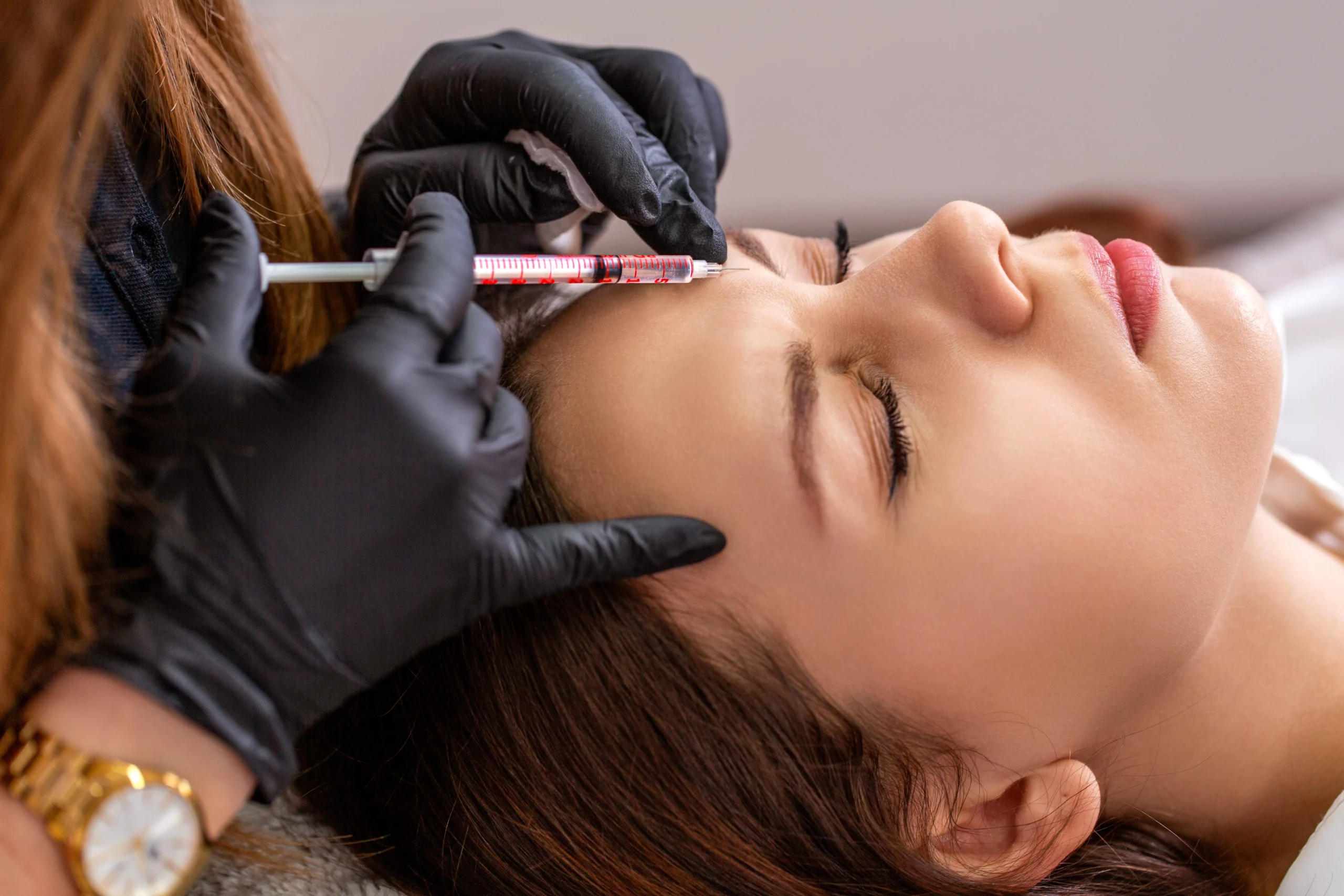
Botulinum toxin injections, commonly known as Botox, relax the underlying facial muscles, which reduces the depth of creases that have both a muscular and compressive origin. While sleep wrinkles are not primarily caused by muscle movement, many of them overlap with expression lines in areas like the crow’s feet, nasolabial fold, and forehead, and neuromodulators can help smooth those areas effectively.
Dermal Fillers
For deeper grooves, particularly nasolabial folds or lines along the cheek that have become structural rather than superficial, hyaluronic acid fillers restore lost volume and smooth the skin’s surface. Results are immediate and typically last six to eighteen months depending on the product and the area treated.
Skin Resurfacing and Collagen Stimulation
Treatments like microneedling, radiofrequency, and laser resurfacing work by stimulating the body’s natural collagen production response. They address the root cause: collagen depletion in the dermis that makes skin more susceptible to both compression damage and aging generally. The ARC Journal of Dermatology published research in 2025 examining the relationship between sleep mechanics and skin wrinkling, offering clinicians updated frameworks for recommending treatments based on wrinkle origin.
The global facial wrinkle treatment market, valued at $112 billion in 2024 and projected to reach $400 billion by 2031, reflects just how significant the demand for these interventions has become. At the same time, the anti-wrinkle products market was valued at $14.55 billion in 2025 and is projected to reach $26.32 billion by 2033, growing at a compound annual rate of 7.5%. These figures confirm that consumers are investing heavily in both professional and at-home solutions for the lines they are developing every night.
For a broader understanding of how wrinkle formation is studied clinically, Mayo Clinic’s overview of aging skin provides well-organized context on the biological factors that determine skin resilience over time.
What Makes Sleep Wrinkles Different From Other Lines
It is worth understanding how to identify a sleep crease versus an expression line, because the distinction shapes which treatment approach is most appropriate. Expression lines follow the direction of underlying muscle contractions: horizontal on the forehead, radiating at the outer eye, vertical between the brows. Sleep wrinkles, by contrast, often appear diagonally, asymmetrically, or in locations that do not correspond to any major facial muscle group.
A common tell is asymmetry. If you notice deeper lines on one side of your face than the other, and you consistently sleep on that side, the cause is almost certainly mechanical. Another tell is pattern: a curved or arc-shaped crease along the cheek that runs from the cheekbone downward has a distinctive geometry that does not match any expression.
Recognizing this distinction helps both patients and providers choose the most targeted treatment. A line that is primarily mechanical in origin may respond better to hydration and volume restoration than to a neuromodulator alone.## Things to Know
- Sleep wrinkles tend to be asymmetrical because most people favor one side throughout the night. If you consistently notice deeper lines on your left cheek than your right, your sleep position is almost certainly the primary cause.
- The face is not the only area affected. Side sleepers frequently develop compression lines on the chest and décolletage as well, areas that many people overlook when addressing skin aging.
- Alcohol and antihistamines reduce the number of position shifts you make during the night, meaning nights when you take either can accelerate compression damage by keeping your face locked in one position for longer.
- Age-related changes in sleep architecture mean older adults spend less time in the deep, restorative sleep stages where growth hormone is released. This compounds the visible effects of both compression and intrinsic skin aging simultaneously.
- Hydrated skin is more elastic and recovers from compression faster than dehydrated skin. Drinking sufficient water throughout the day has a measurable effect on how quickly morning creases resolve after you wake up.
- Many people address expression lines with professional treatments but never identify or address the mechanical component of their wrinkles, which means results are shorter-lived because the nightly damage continues unchecked.
Start Reversing Nighttime Skin Damage at Rose Medical Aesthetics
If lines are already visible throughout the day and your current skincare routine is not moving the needle, it is time to bring in professional support. At Rose Medical Aesthetics in Sarasota, Florida, Rosalie Orrostieta and her team offer targeted aesthetic treatments designed to address both the surface appearance of wrinkles and the underlying collagen depletion that makes skin more vulnerable to nightly compression damage. Whether you are looking at neuromodulators, dermal fillers, or collagen-stimulating therapies, a personalized consultation makes all the difference in choosing the right approach for your skin.
Call Rose Medical Aesthetics today at 941-344-9850, or visit the practice at 3100 Southgate Circle, Sarasota, FL 34239 to schedule your consultation. You can also find Rose Medical Aesthetics on Google Maps to get directions and read patient reviews before your visit.
Frequently Asked Questions
Q: Can sleep wrinkles become permanent, and at what age does that typically happen?
Yes, sleep wrinkles can become permanent, typically becoming harder to reverse from the mid-30s onward as collagen production declines.
When you are younger, your skin’s elasticity allows compression creases to disappear within an hour or two of waking. As collagen and elastin levels drop with age, that recovery window lengthens. By the time you are in your 40s or 50s, lines that were once temporary may remain visible all day, indicating they have become structurally set in the dermis rather than being surface-level creases. Preventive habits are significantly more effective when started before permanent lines form.
Q: Is there a specific type of pillow that helps prevent sleep wrinkles?
Specialized contoured or concave pillows designed to keep the face from pressing flat against a surface can reduce facial compression during side sleeping.
These pillows create a recess for the face so the cheek hovers rather than compresses. While they are not a perfect substitute for back sleeping, they meaningfully reduce the surface area of skin in contact with the pillow. Combined with a silk pillowcase to minimize friction, this combination offers a practical improvement for people who cannot switch to back sleeping entirely. Look for pillows marketed specifically for anti-wrinkle or beauty sleep purposes and verify they have independently reviewed design claims before purchasing.
Q: How are sleep wrinkles different from nasolabial folds?
Nasolabial folds run vertically from the nose to the corners of the mouth and are primarily caused by volume loss and facial movement, while sleep wrinkles tend to appear diagonally and asymmetrically based on pillow contact.
The distinction matters because the treatments that work best differ significantly. Nasolabial folds typically respond well to hyaluronic acid fillers that restore lost volume in the mid-face. Sleep wrinkles that overlap with fold areas may need a combined approach: volume restoration plus habit changes to stop the nightly mechanical compression from undoing the treatment. A qualified provider can assess which factor is dominant in your specific case during a consultation.
Q: Does sleeping with a skincare product on actually make a difference for wrinkle prevention?
Yes, applying targeted actives like retinol or peptide creams before bed takes advantage of the skin’s heightened overnight repair cycle, making nighttime the most effective window for ingredient absorption.
During sleep, blood flow to the skin increases and transepidermal water loss is slightly elevated, which means the skin is both more receptive to active ingredients and more in need of a moisture-sealing layer. Retinol stimulates collagen synthesis, peptides support the skin’s structural matrix, and occlusives like a light facial oil or barrier cream prevent moisture from escaping. Used consistently over several months, this routine creates measurably more resilient skin that holds up better against nightly compression forces.
Q: Are professional wrinkle treatments worth it if I have not changed my sleep habits first?
Professional treatments will deliver results, but their longevity is shortened if you continue compressing the treated areas every night without any positional or environmental changes.
Think of it this way: a filler placed in a fold that is being mechanically deepened for eight hours every night will break down faster than one placed in an area that is not under repeated stress. Aesthetic providers at medical practices like Rose Medical Aesthetics will typically discuss your lifestyle habits as part of the consultation, because getting the most out of any treatment requires addressing the contributing factors as well. Even small changes, such as switching to a silk pillowcase or adding a back-sleeping pillow, meaningfully extend treatment results.
The Bottom Line on Sleep Wrinkles: The Lines You’re Making Every Night
The lines accumulating on your face are not inevitable. Many of them are being created and deepened by the same nightly routine you have followed for years without realizing the mechanical damage involved. Understanding the cause is the first step toward interrupting the cycle, whether that means adjusting your sleep position, upgrading your pillowcase, or committing to a consistent retinol-based nighttime routine.
When preventive habits are not enough to address lines that are already established, professional aesthetic treatments offer targeted, evidence-supported options that go beyond what over-the-counter products can achieve. The key is pairing those treatments with the habit changes that prevent the same damage from recurring. Take an honest look at how you sleep tonight, and if you are ready to address what you see in the mirror, reach out to a qualified provider who can guide you toward the right combination of solutions for your skin.